
Choosing the right healthcare approach and getting answers can be confusing and frustrating, especially for complex health challenges. Many people are seeking out alternative options and treatments because conventional therapies are not working for them.
While conventional therapies are helpful when dealing with an acute emergency or surgery, they mainly focus on treating symptoms with medications and standardized protocols.
Functional medicine takes a personalized approach to uncover and address the root causes of illness taking a whole-body perspective. As a functional medicine nutritionist, I seek to identify and address the root causes of disease and imbalances in the body using nutrition and lifestyle changes. A functional lens views the body as one integrated system, and takes a holistic approach to healing.
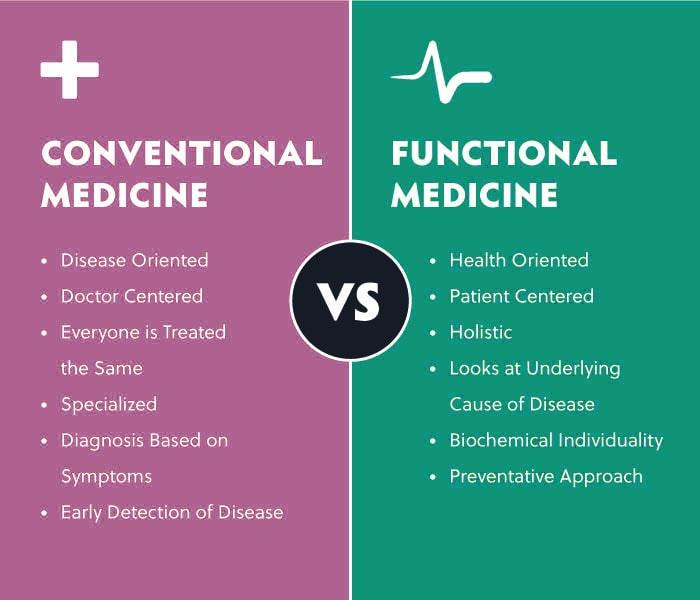
Key Differences Between Functional and Conventional Medicine
Both approaches aim to improve health. However, the methodologies do differ significantly. Here’s a breakdown of how each strategy works.
1. Focus on Causes vs. Symptoms
- Conventional Medicine: Primarily targets symptoms using medications, surgeries, or therapies. For example, if a patient has high blood pressure, a doctor may prescribe medication to control it.
- Functional Medicine: Seeks to understand the underlying causes of health issues. As a functional medicine nutritionist, I would assess diet, hormone levels, nutrient status, and lifestyle and environmental factors. We look to determine what is contributing to high blood pressure and then suggest diet and lifestyle changes that can help correct the imbalance.
2. Personalization vs. Standardization
- Conventional Medicine: Follows established guidelines and treatments that work for most patients. This ensures consistency. However, it does not consider individual differences.
- Functional Medicine: Focuses on highly personalized care. A functional medicine nutritionist considers genetics, diet, lifestyle, and environmental exposures when creating treatment plans.
For instance, two patients with diabetes may receive identical treatments in conventional medicine. In functional medicine, those two patients may receive very different solutions that are tailored based on each person’s unique metabolic and nutritional needs.
3. Long-Term Health vs. Immediate Relief
- Conventional Medicine: Effective for acute conditions such as infections, broken bones, and emergencies. It focuses on resolving immediate health concerns quickly.
- Functional Medicine: Emphasizes prevention and long-term health. Instead of just treating an illness when it occurs, a functional medicine nutritionist helps patients adopt sustainable habits. This approach helps prevent diseases from developing.
This proactive approach benefits those with chronic conditions. It is useful for managing conditions such as autoimmune disorders, digestive issues, and metabolic imbalances.
4. Patient Involvement in Treatment
- Conventional Medicine: The doctor makes decisions. Patients follow prescribed treatments. This approach is efficient. However, it may not actively involve patients in lifestyle changes.
- Functional Medicine: Encourages patient participation. A functional medicine nutritionist works closely with individuals. They educate patients about nutrition, stress management, and wellness practices.
This collaborative model gives patients control over their health. It leads to better adherence to treatment plans. Over time, this improves health outcomes.
Some individuals find that integrating both approaches works best. For example, a person recovering from heart disease might receive life-saving interventions from conventional medicine. A functional medicine nutritionist can then assist in making dietary and lifestyle changes. These changes help prevent further complications and the need for additional surgical interventions.
For those interested in a personalized approach to health, consulting a functional medicine nutritionist can be a valuable step. If you are interested, reach out and start your journey toward long-term wellness.